
ETGARIC DIGITAL · BUSINESS SYSTEMS
AI automation inside your CRM and business workflow
AI is useful when it removes a real step from the working day. We connect it to a defined task: summarise a conversation, prepare a reply, classify a request or turn approved information into the next action. People keep responsibility for the decisions that matter.
Choose work that benefits from flexible language
| Task | Possible AI assistance |
|---|---|
| Long customer conversations | A structured summary for the assigned employee |
| Incoming enquiries | A suggested category and responsible team |
| Replies | A draft based on approved business information |
| Documents | Extract specified fields for review |
| Management updates | Prepare a summary from permitted system records |
Rules handle the predictable; AI handles the variable
Assigning a task after an approved status change does not require a language model. Interpreting varied wording may benefit from one. We separate the two so a predictable rule does not become a more expensive or less consistent AI decision. The core workflow should have a clear fallback when AI is unavailable.
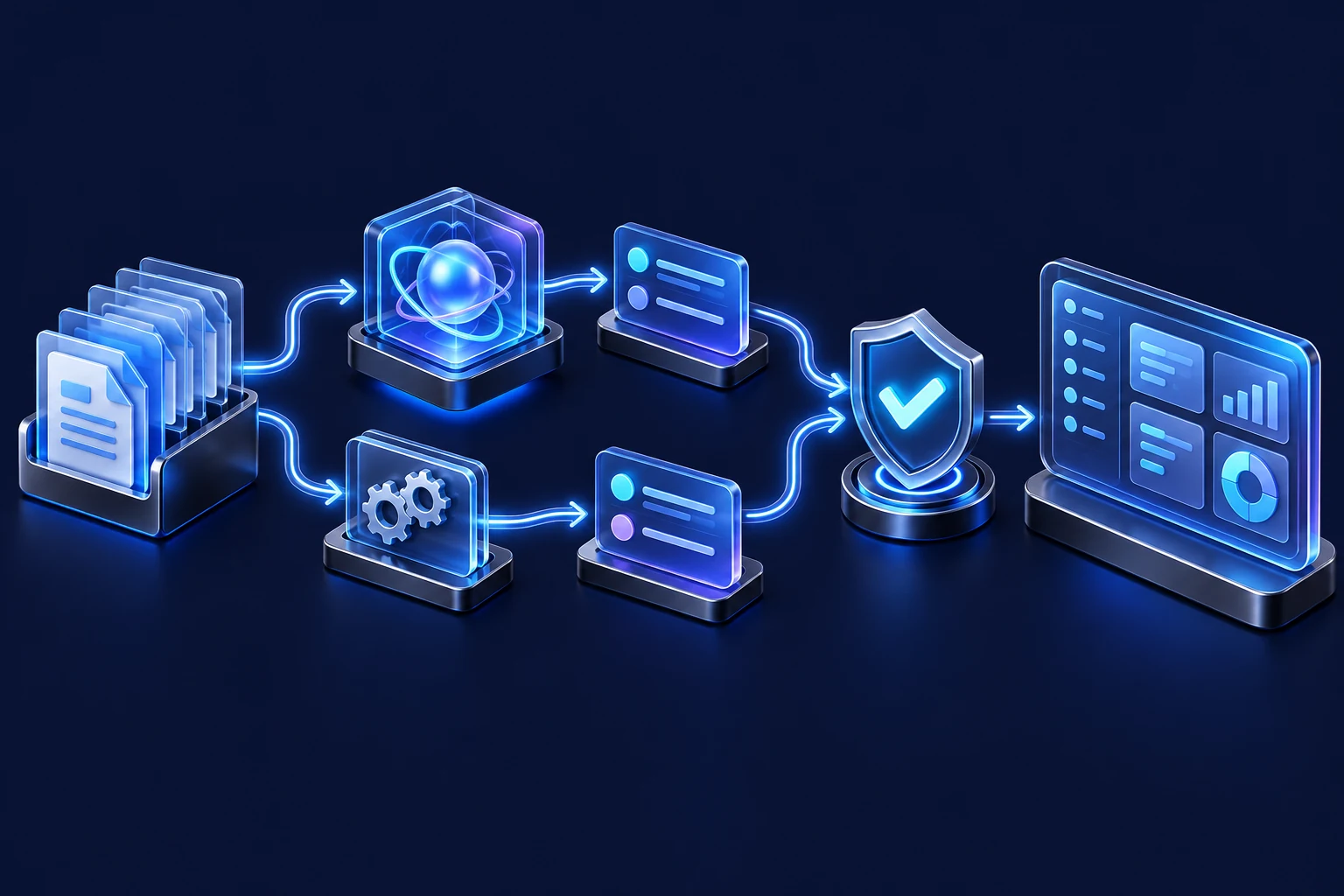
From source information to an approved action
- Approved source or request
- AI prepares structured work
- A person or rule checks it
- An authorised action is recorded
Define the boundaries before granting access
- Which records and documents the model can read, and for what purpose.
- Which actions are suggestions and which may run automatically.
- Which operations require approval, including commitments, payments and deletion.
- How uncertain answers, missing sources and unsuitable requests are handled.
- Which service provider processes information and what operating limits apply.
Test on your business language
We collect representative examples in the required languages, including short messages, unusual phrasing and incomplete requests. Success means a useful, correct output for the agreed task, not just an answer that sounds confident.
For retrieval from company information, sources need an owner and an update process. We test how the assistant handles a missing answer and conflicting information. Sensitive material is included only after its access and processing arrangements have been agreed.
Budget for actual use
AI services may charge by usage or plan. A personal consumer-chat subscription does not automatically cover a business integration. We identify the service account, estimated workload, limits and ongoing review before launch. Development, hosting, model use and maintenance are separate budget items.
Start with assistance, then expand
A useful pilot might create a conversation summary and a draft follow-up task for an employee to approve. After comparing representative results and handling time, we can decide whether more automation is justified. Model changes, new business information and staff feedback become part of maintenance.
Frequently asked questions
Can AI make mistakes?
Yes. We choose suitable tasks, constrain access and use checks or approval where an incorrect result would matter.
Does every CRM need AI?
No. Many teams benefit first from accurate records, clear stages and ordinary automation.
Can you add AI to an existing system?
We first check supported integration options, available data and permissions. A small connected workflow may be enough.
Will it run independently all the time?
The level of autonomy is defined per action. We do not treat a model’s ability to produce text as permission to make unrestricted business decisions.
Further reading: OpenAI: subscription and API billing
Which task should AI help your team complete?
Send a description and a few anonymised examples of the input and desired result. We will define the checks, data access and first useful scope.