
ETGARIC DIGITAL · BUSINESS SYSTEMS
Business automation that connects customers, people and work
A customer writes in a chat, someone copies the details into a spreadsheet, and the next step depends on a reminder. We turn recurring work into a clear process: an enquiry, an owner, a task and a visible result. Build on your current tools or commission a system that fits your business.
Start where work gets stuck
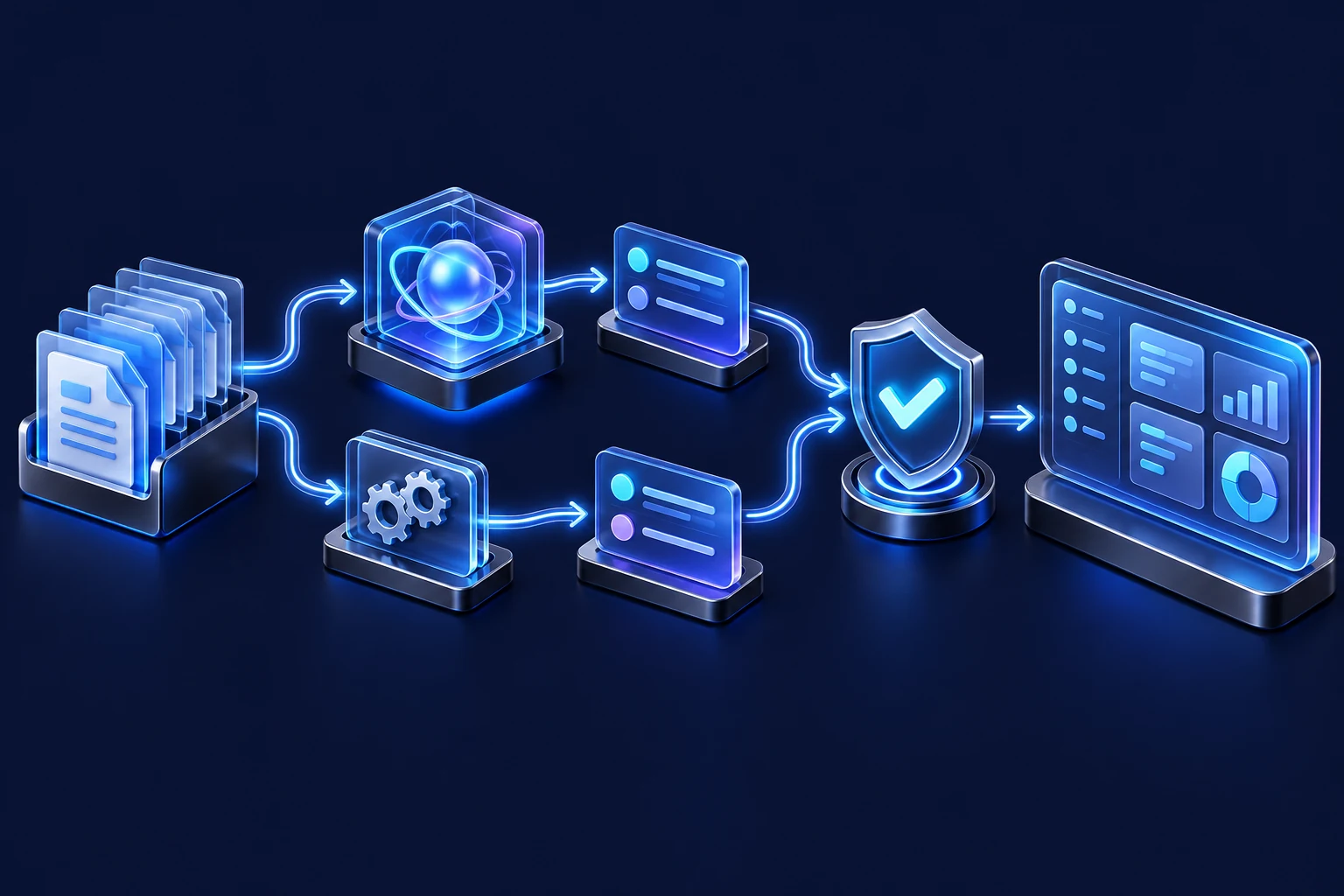
One process from enquiry to completion
- Customer makes contact
- An owner receives the task
- The team records progress
- The manager sees the outcome
What changes for the people doing the work
| Role | Useful improvement |
|---|---|
| Customer | A clear next step and fewer repeated questions |
| Employee | Relevant information, priorities and ownership in one place |
| Manager | Workload, overdue tasks and exceptions that need attention |
| Owner | A process that can be reviewed, measured and handed over |
Automation can work without AI
A rule can assign an enquiry by region, send an agreed reminder or require approval before a status changes. That is often the most dependable way to begin. A shared customer record and a well-designed task board can improve daily work without any model subscription.
AI adds value when the input varies: a long conversation to summarize, a message to classify or a reply to draft from approved information. We agree what it can read, what it can change and when a person must decide.
Build a useful first stage
Map the current process
Walk through a real request, including handovers and exceptions. Identify the repeated entry or delay worth removing.
Agree a focused release
Choose one end-to-end workflow, the necessary screens and the success criteria.
Test with the team
Use representative cases, check access by role and practise handling a failed connection or missing information.
Introduce and improve
Train the users, document responsibilities and plan the next change using actual operating feedback.
A proposal that makes the ongoing commitment clear
- Scope: processes, users, languages, screens and integrations.
- Data: existing records, migration, permissions, export and backup arrangements.
- Operation: hosting, software licenses, messaging and AI usage, where relevant.
- Support: availability, maintenance and future changes agreed separately.
Measure the process, not the number of features
Agree what matters before implementation: response time, overdue requests, repeated data entry or time spent on a recurring task. Compare a representative period after adoption with the starting point. Benefits depend on the process, data and actual use; a long feature list is not a measurement plan.
Frequently asked questions
Do we need to replace our current CRM?
Often not. We first check whether configuration or a focused integration can solve the problem.
Is this suitable for a small team?
Yes. A useful starting point may be one shared workflow rather than a large system.
Can several employees use it from different computers?
Yes. We design shared access and role-based views around your staff, locations and working arrangements.
What does business automation cost?
We quote after mapping the workflow and required connections. Development and ongoing third-party costs are listed separately.
Which repeated task should stop consuming your day?
Describe one process: how it starts, who handles it, which tools are involved and where it stalls. We will suggest a sensible first scope.